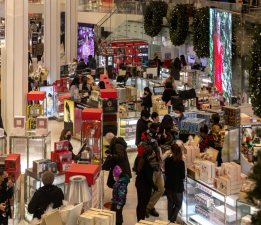
Inflation refers to the phenomenon of a sustained rise in the general price level, leading to a decline in the purchasing power of money. For ordinary families, the most direct feeling is often not the figures reported in the news, but rather the faster money is spent on daily shopping, and the inability to buy as much as before with the same amount of money. Rising prices not only change what people buy, but also how, when, and in what ways they buy. To understand changes in consumer behavior, it is necessary to consider the current financial pressure, expectations for the future, and sensitivity to the relative prices of various goods.
Inflation refers to the phenomenon of a sustained rise in the general price level, leading to a decline in the purchasing power of money. The most direct feeling of inflation for ordinary people is an increase in the cost of living and a decrease in purchasing power. We can measure changes in the price level using the CPI (Consumer Price Index) and PPI (Producer Price Index).
The CPI reflects changes in the prices of consumer goods and services, including food, clothing, housing, and transportation. The PPI reflects changes in the prices of industrial production, including raw materials, intermediate goods, and final products. There is a certain transmission relationship between CPI and PPI. If PPI rises, production costs increase, which may push up CPI; conversely, if CPI rises, household demand increases, which may stimulate PPI.
Impact of Inflation
Decreased Purchasing Power
This means that households can buy less with the same income level, especially those buying daily necessities and low-income households are more easily affected. For rigid expenditures such as food, daily necessities, gas, and electricity, price increases are often the primary concern. If income cannot keep pace with price increases, households will drastically reduce their discretionary spending, prioritizing basic needs. This constraint will change household consumption patterns: those who were previously willing to slack off on optional spending such as entertainment, dining out, and clothing will gradually shift towards more cost-effective alternatives or reduce their budgets for fewer expenditures.
Future Price Expectations Change People's Purchasing Timing
If there is a widespread expectation that prices will continue to rise, households may adopt a "preemptive consumption" strategy, buying durable consumer goods or large items before prices rise to minimize future financial pressure. This behavior may boost demand for certain categories in the short term, such as home appliances, furniture, and durable goods, but in the long run, if prices continue to rise, interest rates increase, and credit tightens, consumption will return to a more cautious pace. On the other hand, if significant price fluctuations or even a decline are expected, households may choose to wait and see, requiring clearer price signals before making purchasing decisions. This waiting period can also slow down the sales cycle in some industries.
Income Mismatch
If inflation exceeds wage growth, the purchasing power of real wages will decrease. In many cases, especially for low- and middle-income groups, the speed and magnitude of wage adjustments are far from keeping pace with rising prices, squeezing their living standards. Although some companies or governments may respond to inflation by raising wages, these increases often lag behind price increases, leading to a decline in real income.
Wage Lagging Effect: Even with wage increase policies, it is usually difficult to offset the effects of inflation. For example, in some countries and regions, the inflation rate may far exceed wage increases, and ordinary wage earners may even experience a "wage reduction." Despite rising nominal wages and declining real purchasing power, residents' quality of life has not actually improved.
Increased Debt Burden
For heavily indebted families or individuals, inflation may offer some benefits, especially with fixed-rate loans. As prices rise, borrowers' real repayment costs (in terms of purchasing power) decrease, alleviating their repayment pressure to some extent. For example, inflation devalues the nominal amount of debt in real terms, thus reducing the actual repayment burden.
However, for residents with fixed income sources (such as pensions, retirement funds, etc.), inflation reduces their real purchasing power, leading to a decline in their quality of life. This is because these income sources are usually fixed, and rising prices erode the real value of these fixed incomes.

How to Cope with Inflation
When inflation occurs, ordinary people should take the following measures to cope with its effects:
- Control consumption, plan budgets rationally, avoid overconsumption and waste, and prioritize necessities and basic living necessities.
- Choose high-quality, reasonably priced goods. When purchasing, compare prices and quality from different brands and merchants to achieve better value for money.
- Investing can be an effective way to cope with inflation. Assets such as stocks, bonds, and real estate can all provide preservation and appreciation of value during periods of inflation.
- Savings can also be an effective way to cope with inflation, but it's crucial to choose savings methods with inflation-resistant capabilities, such as bank time deposits and money market funds.
- Pay attention to the value of currency and try to use stable currencies for consumption and savings, avoiding holding currencies with a high risk of depreciation.
If inflation leads to a decline in the real purchasing power of wages and income, individuals can consider increasing their income sources, such as seeking part-time work or starting a business. Simultaneously, they can consider reducing living costs, such as by reducing daily expenses and conserving energy.
Conclusion
In general, the impact of inflation on residents' lives is multidimensional, involving both direct economic pressure and psychological challenges. While inflation itself is a normal economic phenomenon to some extent, the negative effects of excessive or inappropriate control, particularly in terms of income inequality, income distribution, and social stability, can have a profound impact on residents' lives. In this context, in addition to proactive individual adjustments, the adaptive adjustments of social policies, government response mechanisms, and economic structures are undoubtedly key to alleviating inflationary pressures and ensuring residents' well-being.